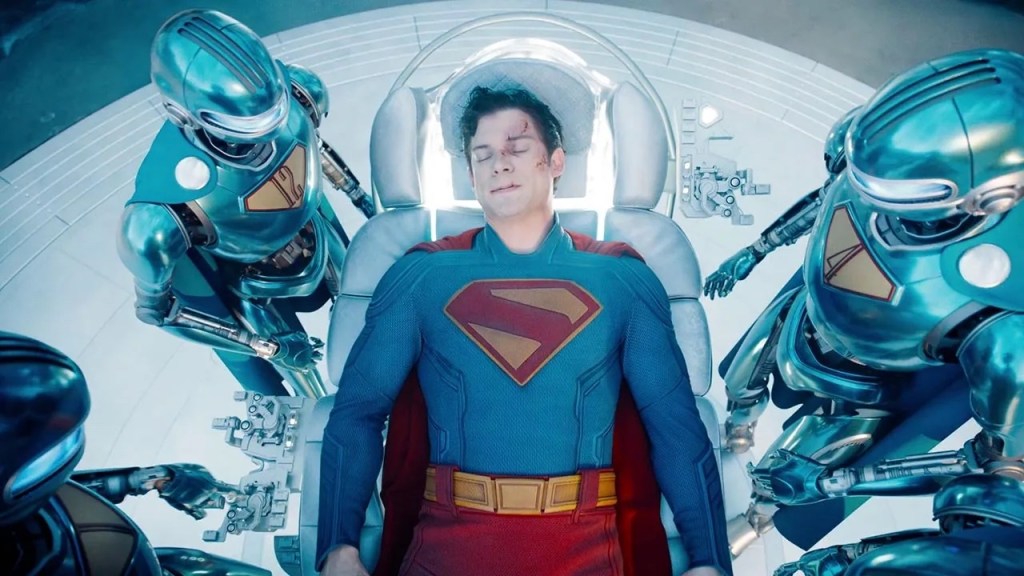
‘Superman’ restores a classic hero with an exciting new setting created by director James Gunn

James Gunn gets Superman. That’s easily the best aspect of his Superman movie. The writer-director knows the Man of Steel isn’t cool.

Superman is a dork. “The Big, Blue Boy Scout” is a nickname that’s been attached to him for years in DC Comics mythology and among comic book fans. Maybe it’s largely derisive, but it also explains what Superman is all about. He sees the good in people. He will do the right thing, even if he doesn’t always think through all of the ramifications of those actions.

What Gunn’s Superman gets right is that it doesn’t try to modernize the character for current audiences. The movie embraces what makes Superman distinct, what makes him the first superhero — maybe the only superhero — that comes to mind for many when imagining the concept.

Superman is a hero because he helps people when he could so easily hurt them. It’s not that he can catch a falling building, fly to the Arctic in minutes, or shoot lasers out of his eyes. He’s supposed to be decent and kind. To portray him otherwise is an attempt to make him cool instead of goofy.

Some might feel like this Superman is a bit too goofy. He wears his trunks on the outside of his costume (which is the best design, even if it looks silly). He built robot companions for himself. He fights giant monsters. And perhaps most controversially, this Superman has a dog. A superpowered dog named Krypto. It’s impossible to be a grim and serious drag when a dog wearing a cape is flying around the screen.

Gunn really toes the line with how much Krypto is in this movie. But it’s not just for comic relief or an attempt to appeal to kids. Krypto serves a storytelling purpose, and more importantly, he helps explain Superman’s character. He hasn’t trained this dog well, presumably because he’s busy. But Krypto also helps Superman feel less lonely because he’s from Krypton.

Superman also shows how human he really is when he fears that his innocent companion has been harmed. It’s another example of how much he cares. In Superman II (1980), Christopher Reeve pleaded with Terence Stamp’s General Zod not to hurt people. Here, he gets pissed when he believes Lex Luthor has hurt his dog. He scolds fellow superheroes for not neutralizing a threat more humanely.

This 2025 Superman isn’t one we’ve typically seen on the big screen. He’s vulnerable and relatable, which is portrayed very believably by David Corenswet. The story begins with Superman having a really bad day and needing to recuperate. Who can’t empathize with that?

Continue reading

‘Black Adam’ Carried by Dwayne Johnson Through Shaky Superhero Movie Ride

Dwayne Johnson is a damn good salesman, which you likely knew. Black Adam is a testament to his star power. This movie almost certainly doesn’t get made, nor does the character headline his own film, without Johnson making it happen.

And without Johnson, this movie probably wouldn’t be that compelling — except to comic book diehards thrilled to see secondary DC Comics characters like Hawkman and Doctor Fate brought to life on the big screen. But they’re a big part of the story and look great. So does Johnson and his real-life superhero physique in a role that seems to have been made for him.

Set in the fictional Middle Eastern nation of Kahndaq, Black Adam immediately sets itself apart from other superhero stories taking place in New York, San Francisco, or fictional cities like Metropolis or Gotham City. (Maybe it’s not a coincidence that the best DC films are set in locations including Atlantis and the Amazon island of Themyscira.)

The movie also benefits from director Jaume Collet-Serra (The Commuter, The Shallows) having plenty of experience with action movies that keeps what story there is moving with little time given to exposition and character moments. Black Adam pretty much goes from one action sequence to another with momentary chances to give the audience a breath. But even “quiet” scenes have action like Johnson busting through walls rather than using doors.

Continue reading

The Podcass 013: More Joker talk, MLB postseason, and Sports Illustrated’s slide

We reviewed Joker on the last Podcass, but the movie set an October box office in finishing No. 1 at the box office over the weekend. And there are soooo many reactions and think-pieces to it that we felt the need to talk some more about it.

After the Joker talk (01:10), we have some baseball talk from WISE Sports Radio (11:42), including the Chicago Cubs’ managerial search. Then the show wraps up with with thoughts on what’s happened to Sports Illustrated (25:20).

Continue reading

The Podcass 012: Everybody smile! It’s Joker time!

Put on a happy face! A new Podcass!

Joker is the big movie release of the weekend and drawing a lot of buzz, so we have a review for you (2:11). Then baseball and football radio segments from WISE Sports Radio. Up first is a preview of the 2019 MLB postseason (15:05), followed by a look at Week 5 in the NFL (27:33).

Referenced during this episode:

  • “[…] all the fucking funny guys are like, ‘Fuck this shit, because I don’t want to offend you.’” [Joker director Todd Phillips in Vanity Fair]
Continue reading

Behind great Joaquin Phoenix performance, ‘Joker’ wags finger at society for creating villain

For the past 20 years, figuring out what makes villains evil has become an entire creative industry. I don’t know if it started with the Star Wars prequels, but that seems to be where it was popularized. How did Anakin Skywalker become Darth Vader? OK, that question was inherent with the character because we knew that he was Luke Skywalker’s father and a Jedi Knight alongside Obi-Wan Kenobi. 

Yet was that story really begging to be told? I think we all — whether “we” means Star Wars fans or general pop culture — thought we wanted to see that story. But would it have been better if Darth Vader stayed ruthless and villainous? Isn’t it enough that we knew he had a change of heart by the end and chose to save his son over his devotion to the Empire and the Sith?

The mystery of what made Anakin turn into Vader added appeal to the entire Star Wars mythology because it invited people to imagine what might have happened, rather than having that story told to them. 

Continue reading