‘The Fantastic Four: First Steps’ feels fresh, but takes too big a first step toward the MCU

The Fantastic Four: First Steps appears to be the film that the Marvel Cinematic Universe needs right now. It doesn’t depend on other movies to establish its world and story. Watching the dozens of other MCU films and TV shows isn’t required to follow what happens.

So it effectively serves as a necessary reset for a superhero movie universe that has felt tired and unfulfilling over the past few years. Especially when the guy with the red cape flying over Metropolis just brought a jolt of freshness to movie theaters and pop culture.

Yet The Fantastic Four feels new and exciting as well because it’s not set in the very same MCU as the familiar one occupied by the Avengers. The best decision made by Marvel and director Matt Shakman is putting these characters in a retro-future 1960s that looks unlike anything seen in an MCU film before.

There’s no cynicism here. It’s a culture full of wonder, which has also built trust between the world and these superhuman heroes who protect it. Reed Richards, Susan Storm, Ben Grimm and Johnny Storm are media sensations, rock stars and monoculture icons, which wouldn’t happen in a modern setting. The movie probably could have had more fun with that. But Shakman has cut a tight film and the story has to move along — which is also part of the problem.

Continue reading
‘Superman’ restores a classic hero with an exciting new setting created by director James Gunn

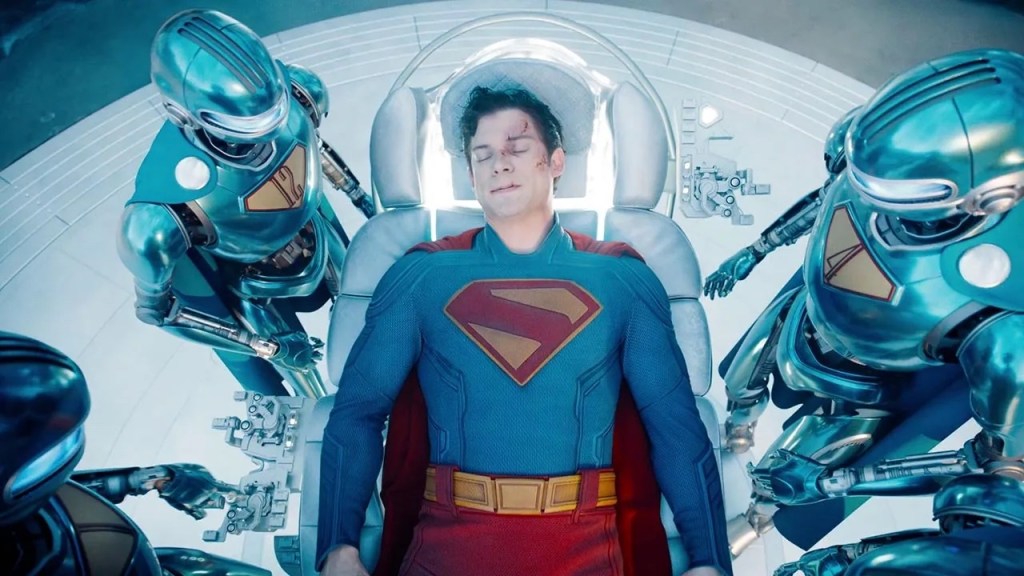
James Gunn gets Superman. That’s easily the best aspect of his Superman movie. The writer-director knows the Man of Steel isn’t cool.

Superman is a dork. “The Big, Blue Boy Scout” is a nickname that’s been attached to him for years in DC Comics mythology and among comic book fans. Maybe it’s largely derisive, but it also explains what Superman is all about. He sees the good in people. He will do the right thing, even if he doesn’t always think through all of the ramifications of those actions.

What Gunn’s Superman gets right is that it doesn’t try to modernize the character for current audiences. The movie embraces what makes Superman distinct, what makes him the first superhero — maybe the only superhero — that comes to mind for many when imagining the concept.

Superman is a hero because he helps people when he could so easily hurt them. It’s not that he can catch a falling building, fly to the Arctic in minutes, or shoot lasers out of his eyes. He’s supposed to be decent and kind. To portray him otherwise is an attempt to make him cool instead of goofy.

Some might feel like this Superman is a bit too goofy. He wears his trunks on the outside of his costume (which is the best design, even if it looks silly). He built robot companions for himself. He fights giant monsters. And perhaps most controversially, this Superman has a dog. A superpowered dog named Krypto. It’s impossible to be a grim and serious drag when a dog wearing a cape is flying around the screen.

Gunn really toes the line with how much Krypto is in this movie. But it’s not just for comic relief or an attempt to appeal to kids. Krypto serves a storytelling purpose, and more importantly, he helps explain Superman’s character. He hasn’t trained this dog well, presumably because he’s busy. But Krypto also helps Superman feel less lonely because he’s from Krypton.

Superman also shows how human he really is when he fears that his innocent companion has been harmed. It’s another example of how much he cares. In Superman II (1980), Christopher Reeve pleaded with Terence Stamp’s General Zod not to hurt people. Here, he gets pissed when he believes Lex Luthor has hurt his dog. He scolds fellow superheroes for not neutralizing a threat more humanely.

This 2025 Superman isn’t one we’ve typically seen on the big screen. He’s vulnerable and relatable, which is portrayed very believably by David Corenswet. The story begins with Superman having a really bad day and needing to recuperate. Who can’t empathize with that?

Continue reading

‘Black Panther: Wakanda Forever’ successfully pays tribute, moves mythology forward

Director Ryan Coogler had a thin line to walk for his sequel to Black Panther.

Following up 2018’s mega-hit that was unlike any Marvel superhero we’d seen before, reaching out to audiences and cultures that previously felt underserved by blockbuster entertainment, would have been difficult enough. Coogler had an opportunity to direct a sequel to 2015’s Creed, but passed on it to jump into the Marvel sandbox and bring comic books’ first Black superhero to the big screen.

Topping himself and continuing the story of Wakanda’s King T’Challa was going to be much more difficult — logistically and emotionally — after the death of star Chadwick Boseman two years ago. How could Marvel and Coogler, along with the amazing cast and crew that brought the fictional African nation to vivid life, keep the story going without the Black Panther himself?

Out of respect to Boseman, Marvel decided that T’Challa wouldn’t be recast. That was probably the correct decision, especially so soon after the actor’s death. Asking fans — and those who worked with Boseman — to accept a new face in the role would have been difficult. (Though during the past two years, sentiment — online, anyway — has turned toward recasting and advancing a character that was so iconic, so important to audiences.)

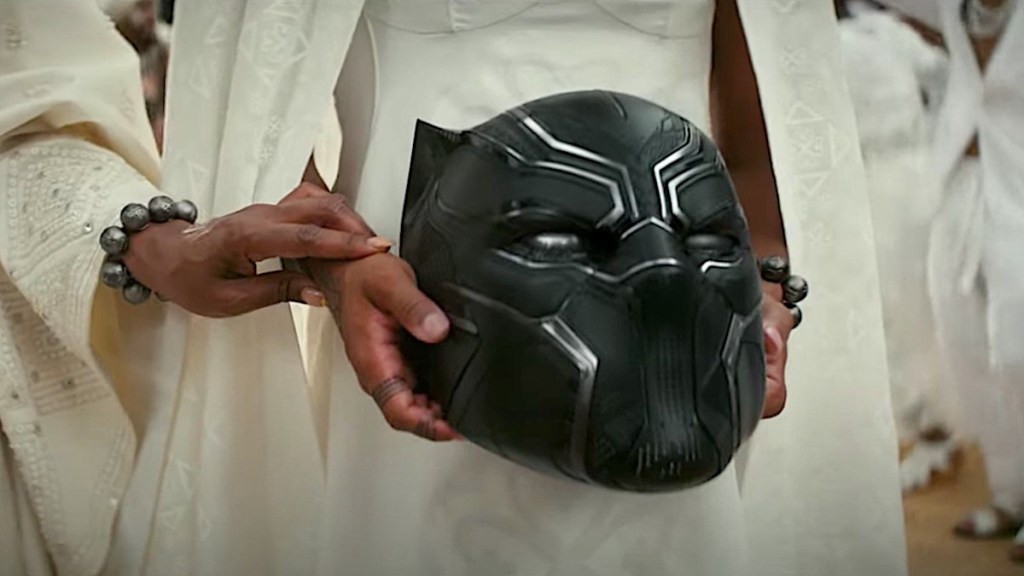
So Coogler and writer Joe Robert Cole (who collaborated on the first film’s screenplay) embraced the real world’s intrusion on Marvel mythology and acknowledged Boseman’s death in the story by giving T’Challa much the same traffic fate. As a result, Wakanda Forever serves as a tribute to the actor, allowing fans and colleagues to mourn and perhaps find closure with the loss.

Continue reading

‘Black Adam’ Carried by Dwayne Johnson Through Shaky Superhero Movie Ride

Dwayne Johnson is a damn good salesman, which you likely knew. Black Adam is a testament to his star power. This movie almost certainly doesn’t get made, nor does the character headline his own film, without Johnson making it happen.

And without Johnson, this movie probably wouldn’t be that compelling — except to comic book diehards thrilled to see secondary DC Comics characters like Hawkman and Doctor Fate brought to life on the big screen. But they’re a big part of the story and look great. So does Johnson and his real-life superhero physique in a role that seems to have been made for him.

Set in the fictional Middle Eastern nation of Kahndaq, Black Adam immediately sets itself apart from other superhero stories taking place in New York, San Francisco, or fictional cities like Metropolis or Gotham City. (Maybe it’s not a coincidence that the best DC films are set in locations including Atlantis and the Amazon island of Themyscira.)

The movie also benefits from director Jaume Collet-Serra (The Commuter, The Shallows) having plenty of experience with action movies that keeps what story there is moving with little time given to exposition and character moments. Black Adam pretty much goes from one action sequence to another with momentary chances to give the audience a breath. But even “quiet” scenes have action like Johnson busting through walls rather than using doors.

Continue reading

‘Thor: Love and Thunder’ major disappointment, despite fun characters and grand spectacle

“Your ancestors called it magic, but you call it science,” Thor said to Jane Foster in Marvel’s first Thor movie (2011). “I come from a land where they are one and the same.”

Whatever it’s called, the magic is gone. At least for the God of Thunder’s run under director Taika Waititi.

Thor: Love and Thunder has some beautiful visuals, creative set pieces, and compelling character arcs, especially for Natalie Portman’s Foster. But the story trying to hold them all together is too weak to build a satisfying film that ranks among the best in the Marvel Cinematic Universe.

What makes this so disappointing is that Waititi’s previous Thor film, 2017’s Thor: Ragnarok, was such a refreshing change of direction from the other Marvel movies with its fast pace, outlandish color palette, and bold designs influenced by legendary artists like Jack Kirby, Alejandro Jodorowsky, and Moebius. (The new wave soundtrack by Devo’s Mark Mothersbaugh added to the alien atmosphere.)

Continue reading