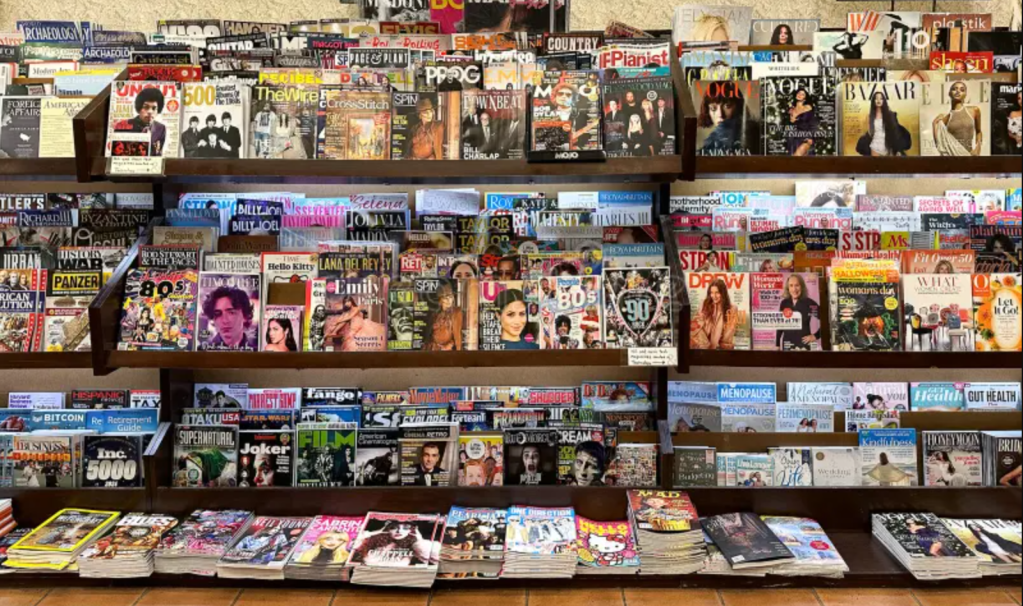
I’ve always loved magazines. The way they look, the way they feel. How they capture a moment and immortalize an image. The content can be fun or serious. Short or long. And many of them have contained some of the best writing — nonfiction and fiction — ever produced.
Magazines set the cultural conversation and influenced taste. Before the internet catered to any and every interest, magazines served that purpsoe. If you have a long layover at an airport, the newsstands and magazine racks are an oasis.
Yes, I dreamed of writing for magazines. Seeing my name in glossy print; my byline on an in-depth feature, celebrity profile or funny opinion piece. Though almost all of my professional writing has been online, I was fortunate enough to start my career with a local magazine, the now-defunct Motor City Sports.
I was reminded of that while listening toThe Press Box podcast last week. It’s one of my favorites (listed in the old-school blogroll on my site). The Ringer’s media critic, Bryan Curtis, with co-hosts David Shoemaker and Joel Anderson, recaps developments in the media — and often, how they influence or reflect culture — each week.
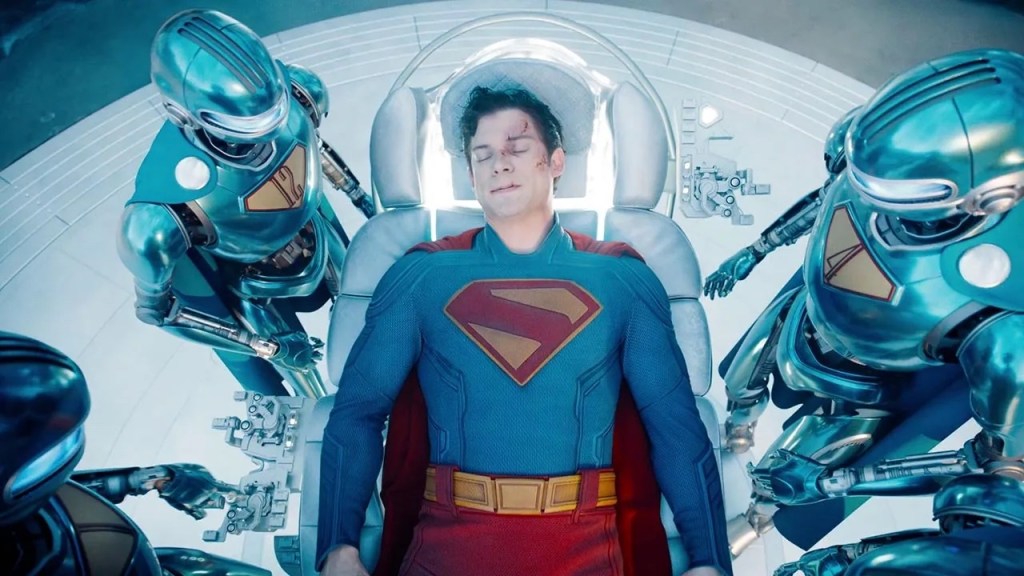
James Gunn gets Superman. That’s easily the best aspect of his Superman movie. The writer-director knows the Man of Steel isn’t cool.
Superman is a dork. “The Big, Blue Boy Scout” is a nickname that’s been attached to him for years in DC Comics mythology and among comic book fans. Maybe it’s largely derisive, but it also explains what Superman is all about. He sees the good in people. He will do the right thing, even if he doesn’t always think through all of the ramifications of those actions.
What Gunn’s Superman gets right is that it doesn’t try to modernize the character for current audiences. The movie embraces what makes Superman distinct, what makes him the first superhero — maybe the only superhero — that comes to mind for many when imagining the concept.
Superman is a hero because he helps people when he could so easily hurt them. It’s not that he can catch a falling building, fly to the Arctic in minutes, or shoot lasers out of his eyes. He’s supposed to be decent and kind. To portray him otherwise is an attempt to make him cool instead of goofy.
Some might feel like this Superman is a bit too goofy. He wears his trunks on the outside of his costume (which is the best design, even if it looks silly). He built robot companions for himself. He fights giant monsters. And perhaps most controversially, this Superman has a dog. A superpowered dog named Krypto. It’s impossible to be a grim and serious drag when a dog wearing a cape is flying around the screen.
Gunn really toes the line with how much Krypto is in this movie. But it’s not just for comic relief or an attempt to appeal to kids. Krypto serves a storytelling purpose, and more importantly, he helps explain Superman’s character. He hasn’t trained this dog well, presumably because he’s busy. But Krypto also helps Superman feel less lonely because he’s from Krypton.
Superman also shows how human he really is when he fears that his innocent companion has been harmed. It’s another example of how much he cares. In Superman II (1980), Christopher Reeve pleaded with Terence Stamp’s General Zod not to hurt people. Here, he gets pissed when he believes Lex Luthor has hurt his dog. He scolds fellow superheroes for not neutralizing a threat more humanely.
This 2025 Superman isn’t one we’ve typically seen on the big screen. He’s vulnerable and relatable, which is portrayed very believably by David Corenswet. The story begins with Superman having a really bad day and needing to recuperate. Who can’t empathize with that?
If this is your first time seeing one of these posts on the blog, they’re inspired by Steven Soderbergh’s annual “Seen/Read” list. At the beginning of every year, Soderbergh posts his chronicle of all the media he consumed during the prior year.
However, I don’t think my choices of movies, TV shows and books will be nearly interesting enough to sustain people scrolling through a long list. So I’m doing it month by month, which is more engaging to me as a writer and easier to track. It’s also something that holds me accountable at the end of a month.
As you’ll see, June was occupied by two TV shows that I loved. However, my mother also took a hard fall on her shoulder and needed a lot of help around the house. So by the end of the day, I didn’t have the energy to watch or read much else when I wasn’t working.
06/02 – Murderbot; S1, Ep. 5: “Rogue War Tracker Infinite”
Yet my choices of movies, TV shows and books likely aren’t interesting enough to keep people scrolling through a long list. So I’m doing it month by month, which keeps it fresh for me as a writer and is easier to track.
Most notably, I finally got back to a movie theater. Thanks, Marvel! And thanks to spoiler culture for getting me to watch The Last of Us every Sunday, even though Season 2 was rather unsatisfying. (I know; I should write about that.)
05/01 – Andor; Season 2, Episodes 5 & 6: “I Have Friends Everywhere,” “What a Festive Evening”
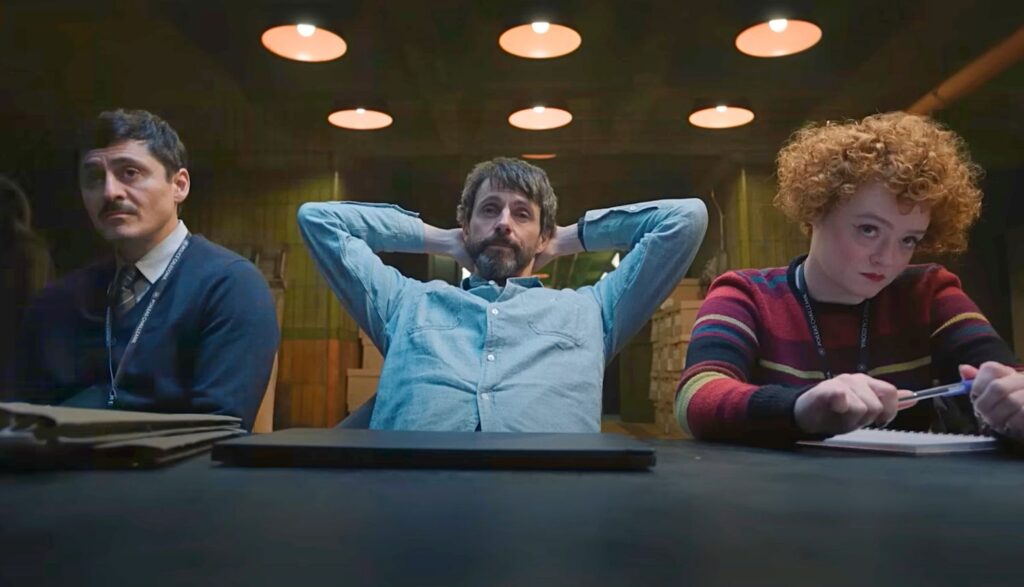
05/02 – Your Friends & Neighbors; S1, Ep. 5: “This Tourist Has Balls”
Every January, Soderbergh posts his chronicle of all the media he consumed during the previous year. I don’t expect my choices of movies, TV shows and books to be nearly as compelling for a year-long list. So I’m doing it month by month, which is more engaging to write and easier to track.
April was a really good month for TV. The Pitt and Daredevil: Born Again were both nearing the end of their seasons, while Andor and The Last of Us were beginning their second turns. Your Friends & Neighbors was also intriguing, but I might not have been interested if not for Jonathan Tropper running the show. He’ll always get my attention because of Banshee and Warrior.
Then there’s Andor, which isn’t reinventing TV but may be reinventing Star Wars. Tony Gilroy is telling adult stories that may take place in another galaxy, but aren’t space fantasy. No Jedi, no Force. And maybe the best definition of “rebellion” that ever could have been created in this universe.


 Ian Casselberry