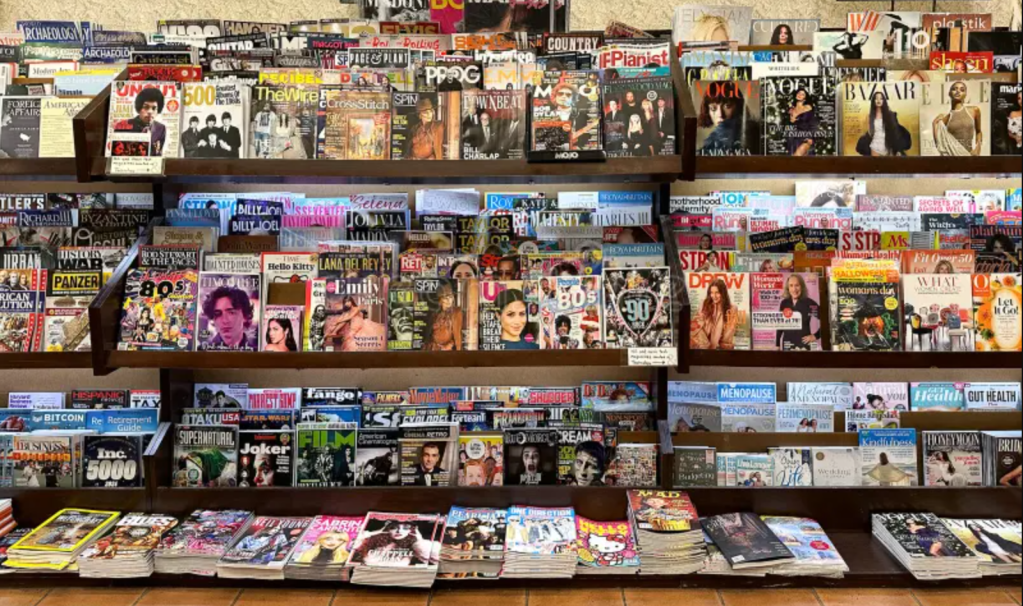
I’ve always loved magazines. The way they look, the way they feel. How they capture a moment and immortalize an image. The content can be fun or serious. Short or long. And many of them have contained some of the best writing — nonfiction and fiction — ever produced.
Magazines set the cultural conversation and influenced taste. Before the internet catered to any and every interest, magazines served that purpsoe. If you have a long layover at an airport, the newsstands and magazine racks are an oasis.
Yes, I dreamed of writing for magazines. Seeing my name in glossy print; my byline on an in-depth feature, celebrity profile or funny opinion piece. Though almost all of my professional writing has been online, I was fortunate enough to start my career with a local magazine, the now-defunct Motor City Sports.
I was reminded of that while listening to The Press Box podcast last week. It’s one of my favorites (listed in the old-school blogroll on my site). The Ringer’s media critic, Bryan Curtis, with co-hosts David Shoemaker and Joel Anderson, recaps developments in the media — and often, how they influence or reflect culture — each week.
This year, Curtis and guests are doing a recurring series titled “25 for 25,” which looks at the changes media has experienced during the past 25 years, where the industry is moving, and in some instances, how that will affect those who work for digital, print and broadcast media.
Last week, Curtis talked to The Ringer’s Sean Fennessey about the future of physical media. Magazines were one of the areas they covered since Fennessey has prior experience at SPIN, Vibe and GQ. They both celebrated and lamented a bygone era, enjoyed largely by finding old publications and classic articles. Magazines are still around, but they just don’t have the same cultural impact.
You can listen from the embed below, from the 3:30 mark to 17:55. But The Press Box is also available on your preferred podcast app.
Listening to the conversation took me back to my love of magazines. Not just as a reader and consumer, but also as an aspiring writer. When such a career was an aspiration and maybe unattainable, I still wanted to work with magazines. The sections at Barnes & Noble and Borders had virtually every publication available.
While working at those bookstores, I enjoyed helping organize the racks, switching out old for new, maybe moving some of my favorites toward the front. And when the magazine associate position opened up at my Borders, hell yes, I applied for it.
I had ideas, like displaying magazines in corresponding sections of the bookstores. Rolling Stone in the music section, Sports Illustrated in sports, etc. However, I didn’t communicate that very well in my interview. I thought my enthusiasm would sell me. But “Damn, I love magazines!” wasn’t a plan.

I didn’t get the position and it crushed me. Even more so when the person who got the gig didn’t do a very good job. We literally had to clean up the mess he made of the section while he was on vacation. Holy shit, I was mad that that week. I held that against upper management for the rest of my stay and never applied for another supervisory or management position.
Back then, that was probably self-destructive. Now, who cares because Borders is gone. Though it was also a learning experience that I’ve carried into job interviews ever since.
Those jobs aren’t at magazines, however. Magazines just don’t exist in the same way anymore. The New Yorker and Vanity Fair are among the publications that still have a presence. But they’re increasingly rare.
Despite sort of beginning as a magazine writer, nearly all of my work is online. That’s where everything is. And it’s unfortunately intangible. People are still more impressed by a title they recognize or when they’re handed an actual physical document. Yet there are so many fewer to enjoy now.
 Ian Casselberry