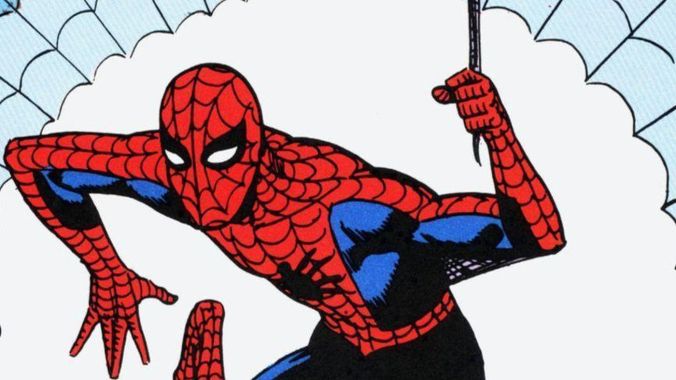
Remembering Steve Ditko, whose place in comic book history feels underrated – and he wanted it that way

ditko_spidey

Friday night brought some sad news for longtime comic book and superhero fans with the news that Steve Ditko, who co-created Spider-Man for Marvel Comics with Stan Lee, had passed away at the age of 90.

Ditko’s death (along with Harlan Ellison’s recent passing) is a reminder that many of the creators responsible for the stories and characters which established the geek culture we currently enjoy did so 50 to 60 years ago. Each time Stan Lee pops up on news alerts for lawsuits, estate disputes or elder abuse allegations, my initial instinct is that he died. The man is 95 years old, though he seems spry in his continued Marvel movie cameos.

Of course, it means we’re getting old too. I probably first read Ditko’s Spider-Man stories 30-plus years ago. When I began reading comics, John Romita Sr., Gil Kane and Ross Andru were the guys drawing Spidey. Marvel’s reprints of the original Spider-Man comics led me to Ditko.

Sure, maybe I just wanted more Spidey stories back then. But this was probably also an early example of appreciating artists by going to the beginning, like listening to a band’s first album or watching a director’s early films. What were those original Spider-Man comics like and how did they compare to the stories I first read?

Ditko’s art fit the idea of Spider-Man so well. A superhero with the powers of a spider would be a bit creepy, right? And Peter Parker was a nerd who got bullied, crushed on girls, was adored by his uncle and aunt, and was a brilliant student. Romita’s version of Spider-Man was a bit too polished, though fit the post-high school version of the character. But Ditko’s version, in addition to the world these characters populated, looked a bit unusual.

Continue reading

Not a Newsletter: Workin’ hard to get my fill

soldier_comics

Hello from the end of the 4th of July holiday weekend! Did a Wednesday July 4 help create a five-day weekend?

The calendar turning to July reminded me that I haven’t accomplished nearly the amount of reading I’ve intended to this summer (yet I still keep buying books; it’s a problem). It doesn’t help when getting sidetracked by a book I didn’t expect to read, like Don’t Stop Believin’, a memoir by Jonathan Cain, the keyboardist for Journey.

Journey was my favorite band as a kid, something I remember taking a lot of shit for, but is apparently cool in a nostalgic way now. (As with comic books, it took 30 years for culture to be accommodating.) So reading Cain’s accounts of how songs like “Don’t Stop Believin'” and “Open Arms” were written was really fun, providing a dose of nostalgia right in the vein.

Particularly amusing was the revelation that “Don’t Stop Believin'” refers to “South Detroit” (something that plenty of Detroiters will tell you doesn’t exist) because Cain thought that line needed an extra syllable.

Songwriting has always fascinated me. Composing melodies and writing lyrics to fit in (or vice versa) just seems ethereal. Even bad songs are the result of that. Getting a glimpse into that process — why isn’t the chorus of “Don’t Stop Believin'” until the end? — just pulled me right in. It was the pleasant surprise of my week.

Continue reading

Fun and assured, Ant-Man and The Wasp is ideal follow-up to Infinity War

lilly_rudd

Every time a new Marvel movie comes out, there seems to be a compulsion to rank it among the previous superhero blockbusters. That sets an awfully high bar for Ant-Man and The Wasp, which doesn’t seem quite fair. Should it really be compared to a massive crossover epic like Avengers: Infinity War?

None of the Marvel movies are “small,” but the smaller scale here is an ideal follow-up to Infinity War‘s galaxy-spanning scope and grave stakes. Much of the speculation leading up to Ant-Man and The Wasp — from sites that needed content — focused on where the story fit in relation to the Avengers’ battle with Thanos. Does it take place before Thanos and his cronies attack Earth? Does it deal with what happened after Infinity War?

++ Avengers: Infinity War is an appetizer, but still a superhero epic with plenty of gut punches ++

While this is obviously a sequel to 2015’s Ant-Man and sort of a sequel to Captain America: Civil War — at least with the repercussions of Scott Lang (Paul Rudd) deciding to help Cap out in his philosophical conflict with Iron Man — it’s also a fairly standalone story that isn’t largely constructed as a setup for bigger films to come. Yes, it takes place before Infinity War, but those events are eventually addressed. (You know better than to leave before the credits are finished with a Marvel movie.)

The one big plotline left dangling from Ant-Man was the fate of the original Wasp, Janet Van Dyne (played in this sequel by Michelle Pfeiffer). During a mission with the OG Ant-Man, Hank Pym (Michael Douglas), Janet sacrificed herself — shrinking to sub-atomic size and getting lost in the Quantum Realm — in order to disable a nuclear missile. But Lang showed that it was possible to return from the Quantum Realm, inspiring Pym to find the wife whom he believed was forever lost.

Continue reading